
About Quorlytic
Engineering is the foundation of trust.
 By QuorlyticUpdated
Quorlytic is an engineering-led data, analytics and AI consultancy. We build the data pipelines, analytics and machine learning that organizations depend on for decisions, and every deliverable ships with a named owner, a monitoring plan and a recovery path, so the system stays accountable after launch, not only at handover.
- Operations & ownershipMonitoring, runbooks and a named owner, so the system holds up after launch.
- Machine learning & AIForecasts and AI applications evaluated against a baseline, with visible uncertainty.
- Analytics & BIMetrics defined once, and reporting built around the decision it supports.
- Data engineeringPipelines, warehouses and lakehouses that give every team the same trusted data.
- Founder-led
- Engineering first
- Method published
- Evidence with client approval
What we do
Four disciplines, built in the order they depend on each other.
Analytics and AI are only as reliable as the data beneath them, so the work starts with the foundation and builds up.
- 01Data engineeringPipelines, warehouses and lakehouses that give every team the same trusted data.Explore
- 02Analytics & BIMetrics defined once, and reporting built around the decision it supports.Explore
- 03Machine learning & AIForecasts and AI applications evaluated against a baseline, with visible uncertainty.Explore
- 04Operations & ownershipMonitoring, runbooks and a named owner, so the system holds up after launch.Explore
Mission
Build the data foundation that lets an organization make a better decision, and operate it with confidence.
Evidence
The work, and the thinking behind it.
Client work is published only with the client's approval and without invented figures. Our engineering method is published in full.
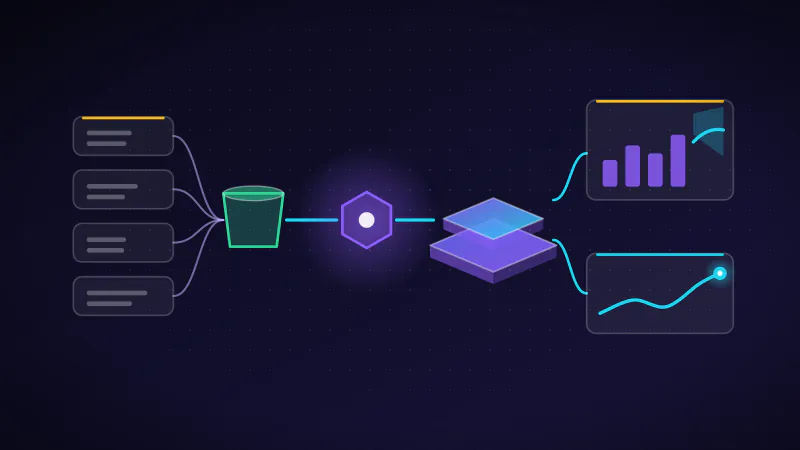
Delivery method
Discover → Design → Build → Deploy → Optimize.
Each stage ends in an artifact you can review and a named owner. The method is written down because a firm that can state its own process can be held to it.
- 01
Discover
Agree the decision, map the data and define acceptance criteria before building.
- 02
Design
Choose the architecture around workload, governance and operating cost.
- 03
Build
Deliver a focused data product with quality checks and access controls.
- 04
Deploy
Release with monitoring, runbooks, rollback and a named owner.
- 05
Optimize
Review incidents, cost and adoption, then improve deliberately.
Principles
How the work holds up.
Three rules every engagement follows, and four things we will not do.
- 01
Solve a real constraint
A technical choice should answer a concrete constraint — latency, reliability, cost or access — not a preference.
- 02
Test against a baseline
A model, dashboard or pipeline is only useful if it beats the process it replaces, measured fairly.
- 03
Leave an owner and a runbook
Every deliverable ships with monitoring, documentation and a named owner who can operate it.
What we don't do
- Publish a client name, logo or result without explicit permission and a verified measurement.
- Claim official partnership, certification or reseller status for a platform we work with.
- Present a reference architecture as a completed client deployment.
- Deploy a model, dashboard or pipeline without a named operational owner and a recovery path.
Responsible AI & data
Controls before capabilities.
- Access and permissions are enforced before data reaches a model.
- Deletion, retention and consent propagate through derived stores.
- Evaluation includes unsupported questions, not only demonstrations.
- Actions with material impact keep a human approval path.
Leadership
Led by the engineer who writes the method.

Deepesh Patel
Founder & Data Engineer
Deepesh Patel leads Quorlytic's approach to dependable data engineering, decision-focused analytics and responsibly operated enterprise AI, and writes the engineering guides published on this site.
Your next data decision
Start with a clear problem.
Build what comes next.
Bring the business question.
We'll help shape the engineering brief.