
Skip to content
QuorlyticTalk to a Data ExpertContact
Menu

Solutions

Start with the problem that matters.

Solutions here are complete decision systems rather than products: Customer 360, demand forecasting and enterprise AI search, each built on one governed data foundation. Every solution starts from a single business decision, the data path that supports it, and the workflow where someone acts on the result.

A solution connects data, analytics and the person who acts on the result. Start with a bounded use case and define a useful outcome before choosing technology.

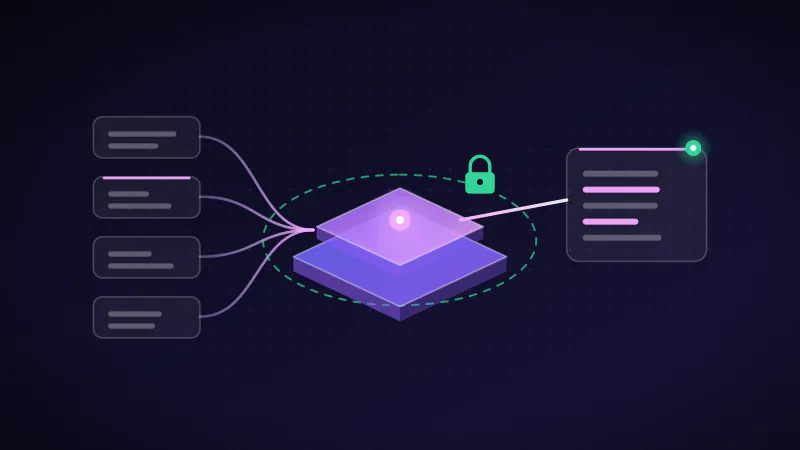
Illustrative concept

01 / Customer intelligence

A connected customer view. With context intact.

Bring customer interactions together without treating every source as equally reliable. Connect identity, transactions and service history into a governed view that supports a defined business action.

Business problem
Customer identity and activity are fragmented across operational systems.
Implementation
  • Identity resolution
  • Customer data model
  • Consent context
  • Source precedence
  • Transaction history
  • Interaction history
Decision enabled
A governed customer context that downstream teams can trust.
Explore the solution
02 / Demand forecasting

Plan for demand. Account for uncertainty.

Connect forecasting to replenishment, inventory or production planning. Build a repeatable evaluation before committing a business process to a new model.

Business problem
Planning under uncertainty.
Implementation
  • Historical demand
  • Feature engineering
  • Forecasting
  • Evaluation
  • Planning constraints
Decision enabled
A planning range that teams can review and act on.
Explore the solution
Illustrative demand forecasting interface showing historical demand, a forecast horizon, confidence range, demand drivers and planning scenarios.
Illustrative decision interface — example values only; not client data or results.
04 / Solution

Price decisions need evidence, not a model’s opinion.

Start from the price decision someone has to make — list, discount, promotion or renewal — then assemble the evidence, the guardrails and the measurement that decision needs. Historical analysis describes past decisions; a controlled test is what supports a new one.

Business problem
Pricing analytics built around named price decisions: elasticity analysis, controlled tests, segmentation, guardrails and margin measurement.
Implementation
  • Pricing decision, guardrail and measurement brief
  • Elasticity and segment analysis with stated limits
  • Controlled test design where a test is feasible
  • Margin and outcome review pack
Decision enabled
Pricing decision, guardrail and measurement brief
Explore the solution
05 / Solution

Measure marketing as a decision system.

Attribution, incrementality and channel reporting answer different questions and disagree by construction. Decide which question the business is actually asking, then build the measurement that can support it — and say plainly where it cannot.

Business problem
Marketing measurement design: attribution models and their limits, incrementality testing, channel analysis and campaign decision systems.
Implementation
  • Measurement question and method decision
  • Attribution and incrementality design with stated limits
  • Channel input reconciliation and definitions
  • Decision cadence, owner and review pack
Decision enabled
Measurement question and method decision
Explore the solution

One foundation · three decision systems

Different questions. One governed data foundation.

Customer context, demand planning and enterprise knowledge look different at the surface. They depend on the same foundations, so quality, access and meaning are solved once rather than per use case.

  • 01Customer contextKnow who you are serving.
  • 02Demand planningKnow what is likely next.
  • 03Enterprise knowledgeKnow what the organisation already knows.

Shared governed data foundation

  • Data qualityReconciliation and acceptance tests
  • GovernanceOwnership, access and retention
  • Semantic contextShared metric and entity definitions
  • ObservabilityFreshness, lineage and incident signals
  • SecurityPermission-aware access at every layer

Delivery model

From problem to production.

A Quorlytic engagement starts with the decision that needs to improve, then works backwards through data, architecture and implementation.

  1. 01

    Frame

    Define the decision.

    Clarify the business question, owner, constraints and success criteria.

    OutputDecision briefSignalAcceptance criteria + decision owner
  2. 02

    Connect

    Map the environment.

    Assess systems, sources, quality, access and integration requirements.

    OutputSource + architecture mapSignalSource contracts + quality baseline
  3. 03

    Build

    Engineer the capability.

    Build the pipeline, analytics layer, ML/AI workflow or decision interface.

    OutputWorking implementationSignalVersioned code + evaluation results
  4. 04

    Operate

    Make it dependable.

    Validate, monitor, document and improve the production system.

    OutputMonitoring + handoverSignalRunbooks + freshness + incident path

Technology context

Architecture before tooling.

Tools are selected against the workload, governance and operating cost of a solution — not the other way around. The layers below show where each technology fits.

  1. 01Business consumptionDecision surfaces and reporting.
    • Power BI
    • Tableau
    • Looker
    • Metabase
  2. 02AI & MLModels, retrieval and evaluation.
    • LLM APIs
    • Vector databases
    • RAG frameworks
    • Evaluation tooling
  3. 03Data engineeringPipelines, transformation and orchestration.
    • Python
    • SQL
    • Spark
    • Airflow
    • dbt
    • Kafka
  4. 04Data platformsWarehouse and lakehouse foundation.
    • Snowflake
    • Databricks
    • BigQuery
    • Redshift
    • PostgreSQL
    • Microsoft Fabric
  5. 05CloudWhere the platform runs.
    • AWS
    • Azure
    • Google Cloud
  6. 06OperationsRelease, monitor and operate across every layer.
    • CI/CD
    • Model monitoring
    • Data observability
    • Orchestration

Technologies we work with. No partnership, certification or endorsement is implied unless explicitly supported.

Engineering & operating principles

How the work is built to last.

  1. 01

    Governance by design

    Access, ownership and lineage belong in the architecture, not only in a policy document.

  2. 02

    Observability

    Pipelines, models and AI systems should expose their operational state.

  3. 03

    Decision ownership

    Every solution needs a person or system responsible for acting on the output.

  4. 04

    Measurable validation

    Models and analytics are evaluated against a defined decision, not a vanity metric.

  5. 05

    Portability

    Avoid unnecessary platform coupling where practical.

Questions

Common questions.

What is the difference between a solution and a service?

A service is a capability, such as data engineering or BI. A solution applies several capabilities to one business problem, such as demand forecasting or a customer 360, with the data, models and decision workflow that problem needs.

Can a solution be built on our current platform?

In most cases. The solutions are designed around the decision and the data, not a vendor, so they are built on the warehouse, lakehouse and BI tools you already operate wherever those fit the workload.

How is the first result scoped?

To one decision and one data path, so it can be tested against today's baseline before the solution is extended. Data readiness is assessed first, because it decides how quickly a trustworthy result is possible.

How is success measured?

Against the baseline the business already uses: the current forecast, report or manual process. Each solution states the measure, the comparison period and what it does not cover before work starts.

Your next data decision

Start with a clear problem.
Build what comes next.

Talk to a Data Expert

Bring the business question.
We'll help shape the engineering brief.