
How the platforms differ by decision
| Dimension | Databricks | BigQuery |
|---|---|---|
| Best-fit workload | Distributed processing, streaming, feature engineering and model training, with analytics on the same data. | Governed serverless analytical SQL at scale, with concurrent reporting and dashboards. |
| Processing model | Spark clusters and jobs you configure; engines you operate. | Managed compute with on-demand or capacity pricing; capacity managed for you. |
| Architecture | Lakehouse on object storage with table formats and layered models. | Datasets inside a managed service, with external tables over Cloud Storage where needed. |
| Operating model | Cluster, job and notebook operations owned by your team. | Fewer platform components to operate, with more emphasis on query and schema design. |
| Skills required | Spark or Python engineering plus pipeline discipline. | Strong SQL, partitioning and cost-aware query design. |
| Governance | Workspace, catalogue and storage permissions assembled across services. | Cloud identity with dataset, column and policy-tag controls inside the platform. |
| Cost model | Compute consumed by clusters and jobs, plus storage. | Bytes scanned and compute capacity, plus storage billing. |
| Limitations | More of the platform is yours to run and tune. | Less suited to heavy distributed processing and model training outside the service. |
| Migration implications | Pipelines and jobs are typically rewritten rather than translated. | SQL is translated, and partitioning plus access model are rebuilt. |
The processing model is the first question
Ask what the workload actually does. If it trains models, processes event streams, or reshapes large semi-structured datasets, you need a distributed processing engine and a place to run jobs. If it models business measures and serves concurrent queries to dashboards, you need an analytical service with predictable performance. Each platform can do some of the other’s job; only one is designed around it.
Architecture and where the data lives
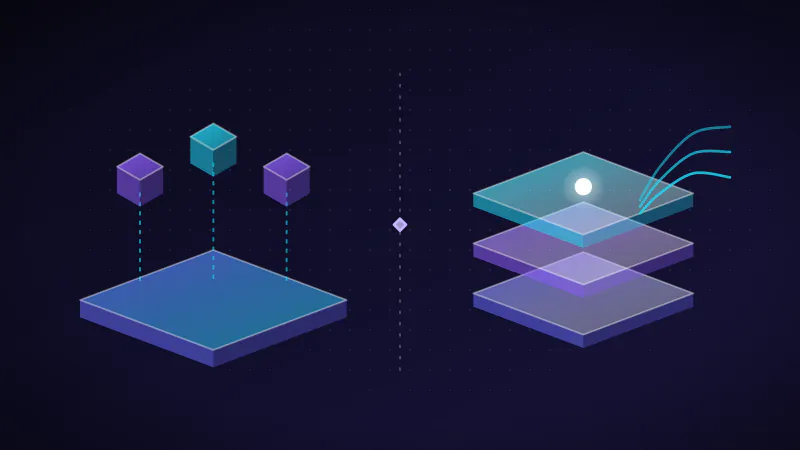
Databricks runs on cloud object storage and organises data through table formats and layered models, so processing and analytics share one copy. BigQuery manages storage and compute for you and exposes datasets and slots, so the platform absorbs capacity management. Choose the model your team can operate: explicit control of files and clusters, or managed capacity and slot behaviour.
Concurrency, cost and predictability
BigQuery’s pricing model separates bytes scanned and compute capacity, which makes query design and partitioning visible in the bill. Databricks charges for the compute that clusters and jobs consume plus the storage behind them, which makes job efficiency and cluster configuration the cost levers. Both are controllable; they are controlled by different habits.
In BigQuery, partitioning on a date column and clustering on frequently filtered columns cut the bytes a query scans, and requiring a partition filter on large tables stops accidental full scans. Capacity pricing through reservations makes spend predictable for steady workloads; on-demand pricing suits spiky, lower-volume use.
In Databricks the equivalent habits are job clusters that start for a run and stop afterwards, autoscaling limits, a per-workload choice between classic and serverless compute, and tags on every cluster so spend can be attributed to a team.
- Query patterns and partitioning reviewed against cost
- Job and cluster configuration owned by a named team
- Cost attributed per workload, not per platform
Governance and access
BigQuery inherits Google Cloud identity and offers dataset, table, policy-tag and column-level controls. Databricks combines workspace, catalogue and storage permissions across a wider estate. In both cases, access should be enforced before data reaches a consumer, tested with the identities real users hold, and logged for audit.
Skills and operating model
BigQuery suits SQL-led teams that want capacity managed for them. Databricks suits teams with Spark, Python and pipeline engineering skills who want control over jobs, clusters and notebooks. The operating model decides more of the total cost than the licence does, because it decides who fixes the pipeline at 7am.
Illustrative example · hypothetical organisation
Worked example: a team already on Google Cloud
Take a hypothetical logistics company whose operational systems already run on Google Cloud, with analysts who write SQL and a small data science team.
Shipment reporting and route analysis are SQL over structured events, a natural fit for BigQuery: the data stays in the same cloud, identity is shared, and partitioning by event date keeps scans contained. BigQuery ML covers some of the data science team's first questions, such as a baseline delay model, inside the same service.
The case for adding Databricks appears only if the modelling work grows into large feature pipelines, streaming enrichment or custom training environments. At that point the choice is about operating a second platform, and the decision record should say which one owns each shared measure.
Migration implications
Moving to BigQuery usually means translating SQL and rebuilding partitioning and access for the managed model. Moving to Databricks usually means rewriting pipelines and jobs, not translating them. Either way, business measures must be reconciled before cutover and the old path retired deliberately rather than left running.
Questions and trade-offs
Question
Can BigQuery run machine-learning workloads?
It supports SQL-based modelling and integrates with Google Cloud machine-learning services, which covers many analytical use cases. Workloads that need heavy distributed training, custom Python environments and full control of the compute engine are usually a better fit for a processing platform such as Databricks.
Question
Is Databricks more expensive than BigQuery?
Neither platform has a universally lower cost. BigQuery cost tracks bytes scanned and capacity; Databricks cost tracks the compute clusters and jobs consume plus storage, and both include the engineering effort to keep workloads efficient. Compare on your own query and job patterns rather than on list pricing.
Question
Can Databricks run on Google Cloud?
Yes. Databricks is available on AWS, Azure and Google Cloud, so the cloud you use does not settle the platform on its own. What it changes is identity, networking and data egress: keeping processing and storage in the same cloud and region avoids transfer costs and simplifies access control.